


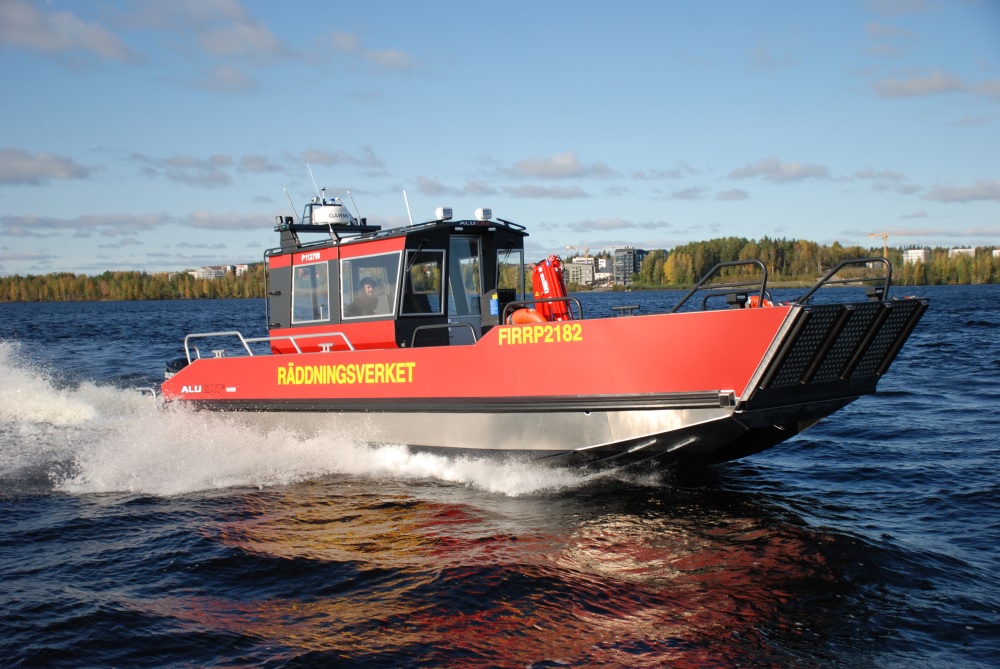


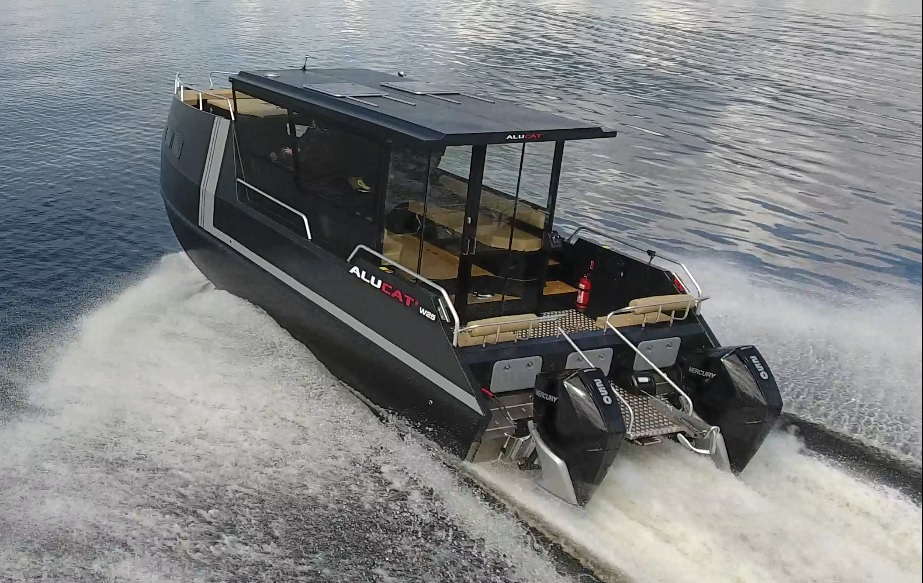
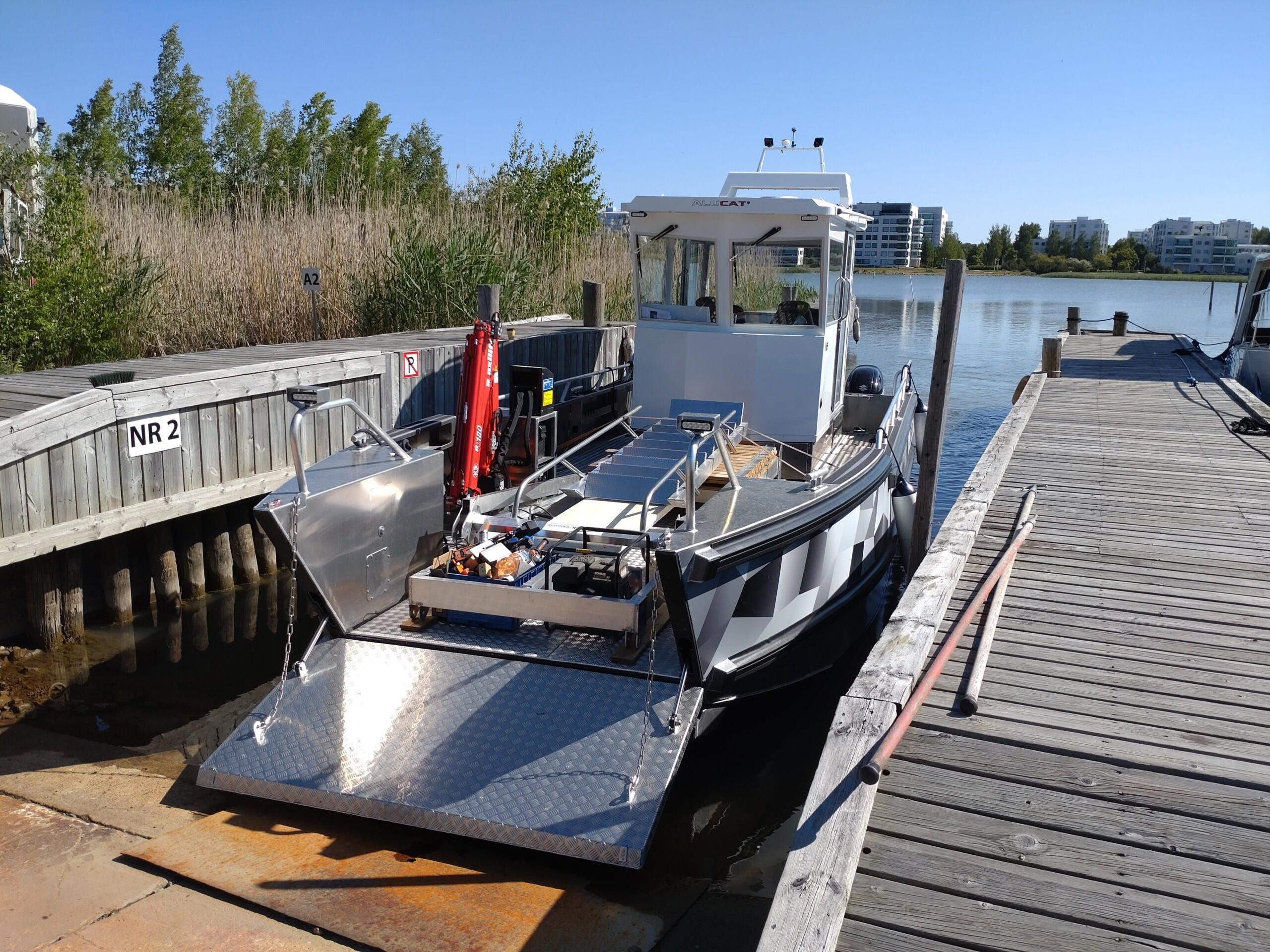
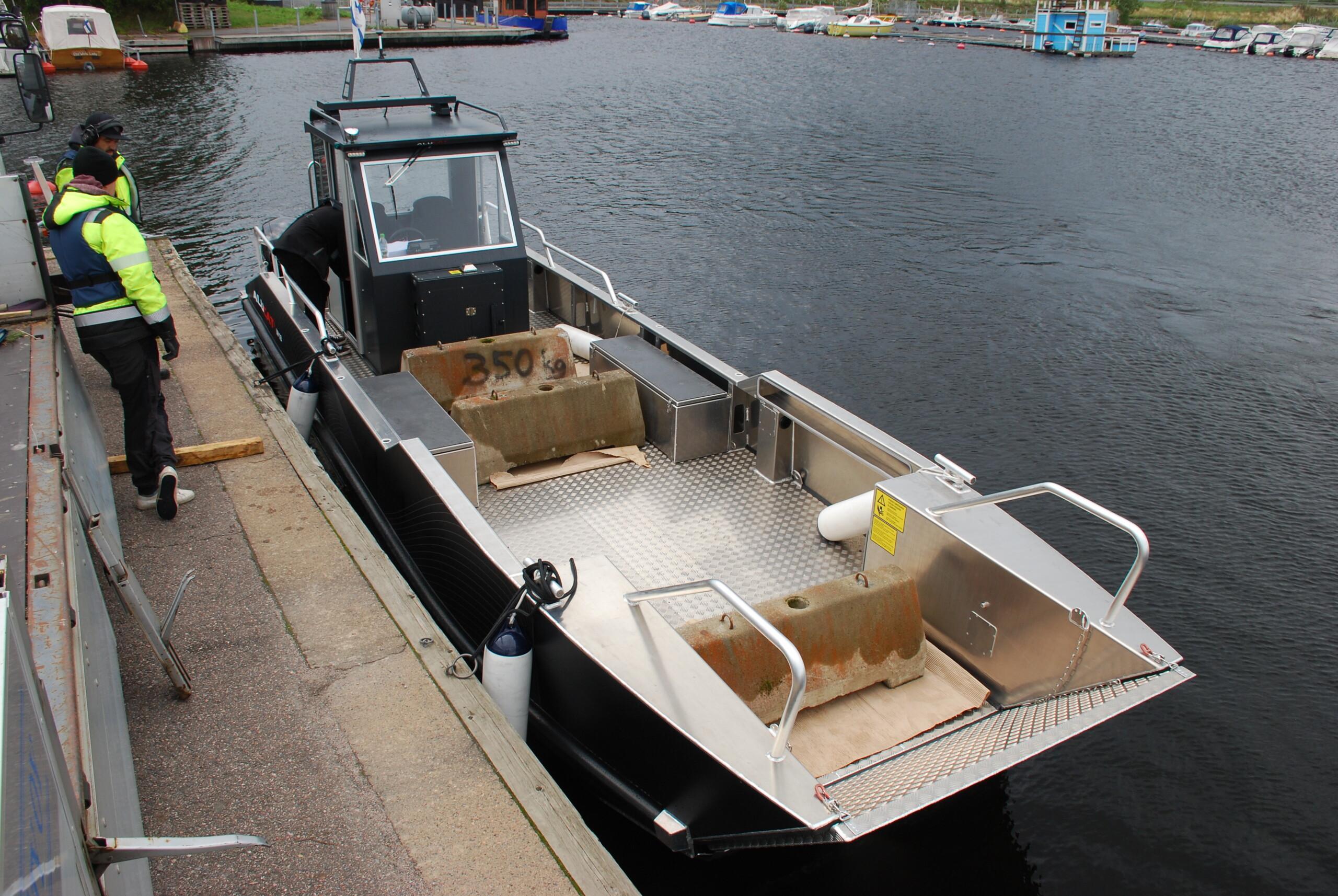
Payload capacity directly affects what a workboat can accomplish. In addition to personnel, workboats often need to carry tools, fuel, safety and rescue equipment, as well as specialized gear required for different operations.
That is why sufficient payload capacity should be considered already during the planning phase of a workboat purchase. The boat should meet current operational requirements, but ideally also provide enough capacity to support future needs.
Sufficient payload capacity provides greater operational flexibility
The operational requirements of a professional workboat can change throughout its service life. Additional equipment such as a crane, specialized gear, extra storage space, or other mission-specific systems may be needed later on. To learn more about workboat customization options, click here..
When a workboat has sufficient payload capacity and appropriately sized deck space, the same platform can be adapted for a variety of missions in the future as operational requirements evolve.
This is one of the reasons why vessel size and payload capacity should be evaluated not only based on current requirements, but also with future operational needs in mind. A vessel that is too small may meet today's demands, yet provide less flexibility for additional equipment, modifications, or new mission profiles later on.
Kantavuus ei ole vain yksi numero
The usability of a workboat is determined by a combination of factors. In addition to payload capacity, it is important how cargo can be arranged on board, how much working space remains available, and how easily personnel and equipment can move around the deck. Safe load distribution and the operating conditions of the vessel also play a key role in ensuring efficient and reliable performance.
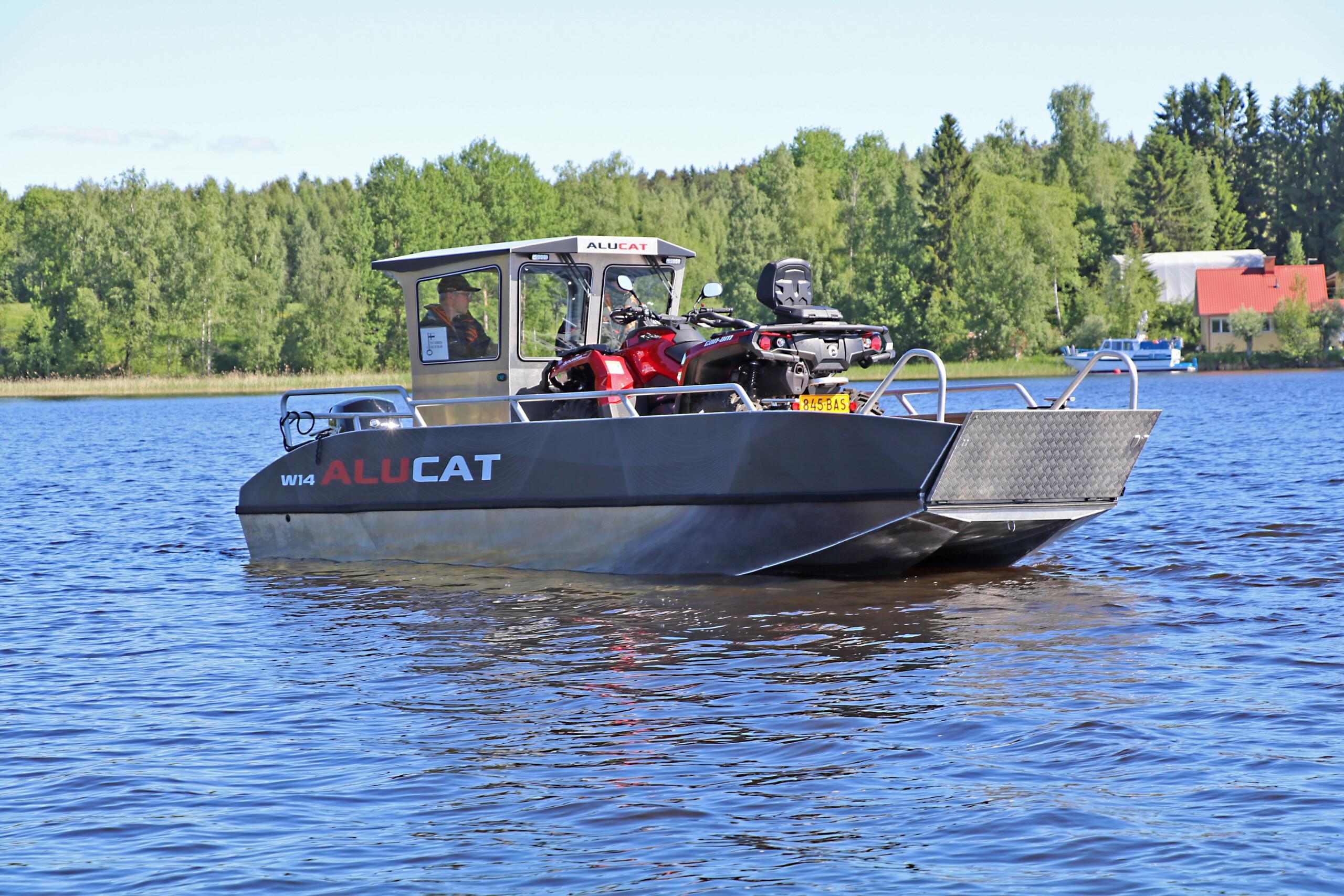
In practice, the payload carried by a workboat often consists of several different elements at the same time. In addition to personnel, the vessel may need to transport tools, spare parts, rescue equipment, and other mission-specific gear. Sufficient payload capacity provides greater flexibility when configuring the vessel for its intended purpose. Each model in our range has its own maximum payload capacity, and you can explore the payload capacities of different models across our product range.For example, the payload capacity of the W14 is approximately 1,600 kg, while the W35 offers a payload capacity of around 5,000 kg.
One Workboat, Multiple Missions
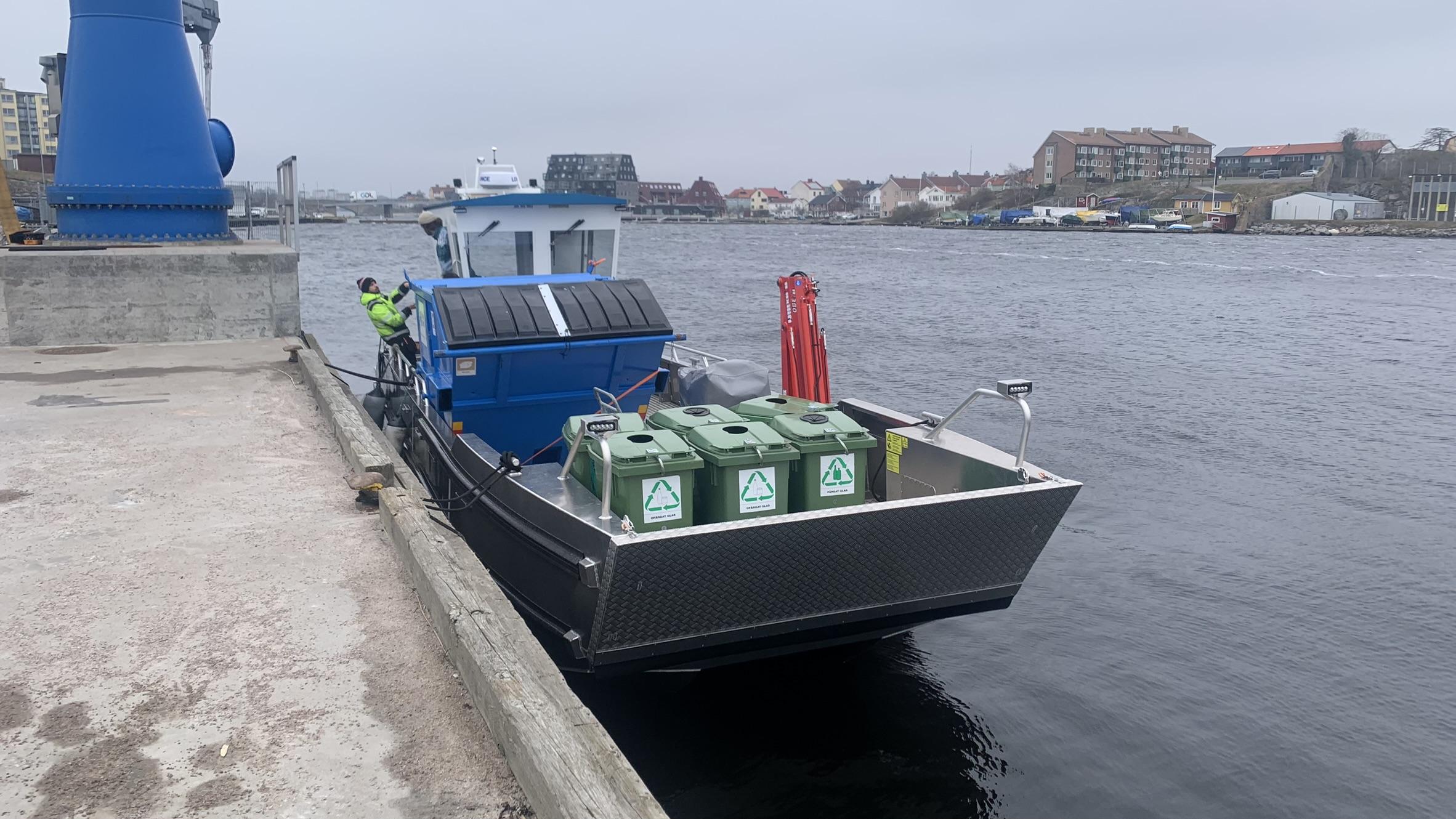
Sufficient payload capacity can also extend a vessel’s usefulness over the long term. The same boat can be equipped for different tasks as operational requirements change, providing greater flexibility throughout its service life.
Depending on the intended use, the vessel can be equipped with cranes, specialized equipment, storage solutions, and other mission-specific systems. In these cases, the boat serves as a working platform rather than simply a means of transportation.
When investing in a workboat, it is worth considering not only today's requirements but also the tasks the vessel may need to perform several years from now. Sufficient payload capacity and adaptability can provide greater flexibility when operational needs change over time.
Payload Capacity Influences the Overall Value of a Workboat
When choosing a professional workboat, individual technical features should not be evaluated in isolation. Payload capacity, deck space, outfitting options, and vessel design work together to determine how effectively the boat can perform in real-world operations.
Sufficient payload capacity can make it possible to carry more equipment on a single trip while providing greater flexibility for mission-specific outfitting. A properly sized vessel can also reduce the need to compromise between personnel, equipment, and available working space.
Therefore, payload capacity should be viewed as an integral part of a vessel’s overall operational value, rather than simply as a single technical specification.
Summary
In a professional workboat, payload capacity is much more than just a technical figure in a brochure. It directly affects how many personnel, tools, supplies, and other equipment can be carried safely, as well as the types of missions and outfitting options the vessel can support.
Riittävä kantavuus antaa myös joustavuutta tulevaisuuteen. Veneen käyttötarkoitukset voivat muuttua sen elinkaaren aikana, jolloin mahdollisuus lisätä tai vaihtaa tehtäväkohtaista kalustoa voi olla merkittävä etu.
In ALUCAT® catamarans, payload capacity, deck space, and a stable hull design work together as an integrated solution that can be tailored to a wide range of professional applications.
When a workboat is expected to provide not only transport capacity but also functional workspace and the ability to accommodate mission-specific equipment, payload capacity becomes one of the key factors determining the vessel’s overall operational value.
Are you planning a new workboat?
Payload capacity, deck space, and outfitting flexibility should all be considered from the very beginning of the boat purchasing process. The ALUCAT® range includes aluminum catamarans of various sizes designed to meet different professional operational requirements.