




The CE classification for boats is based on the EU Recreational Craft Directive (RCD). The classification divides boats into four categories (A, B, C, and D) according to the conditions for which they are designed.
When selecting a boat, it is always important to check its CE classification, as it indicates the operating conditions the vessel is designed for and the safety requirements it must meet.
The CE classification defines a boat’s design parameters in relation to wind and wave conditions, as well as the environmental conditions it must safely withstand. However, the classification does not determine where a boat may be operated, but rather the conditions for which its structure, stability, and safety features have been designed.
The Four CE Categories
The CE classification is divided into four different categories, as mentioned above.
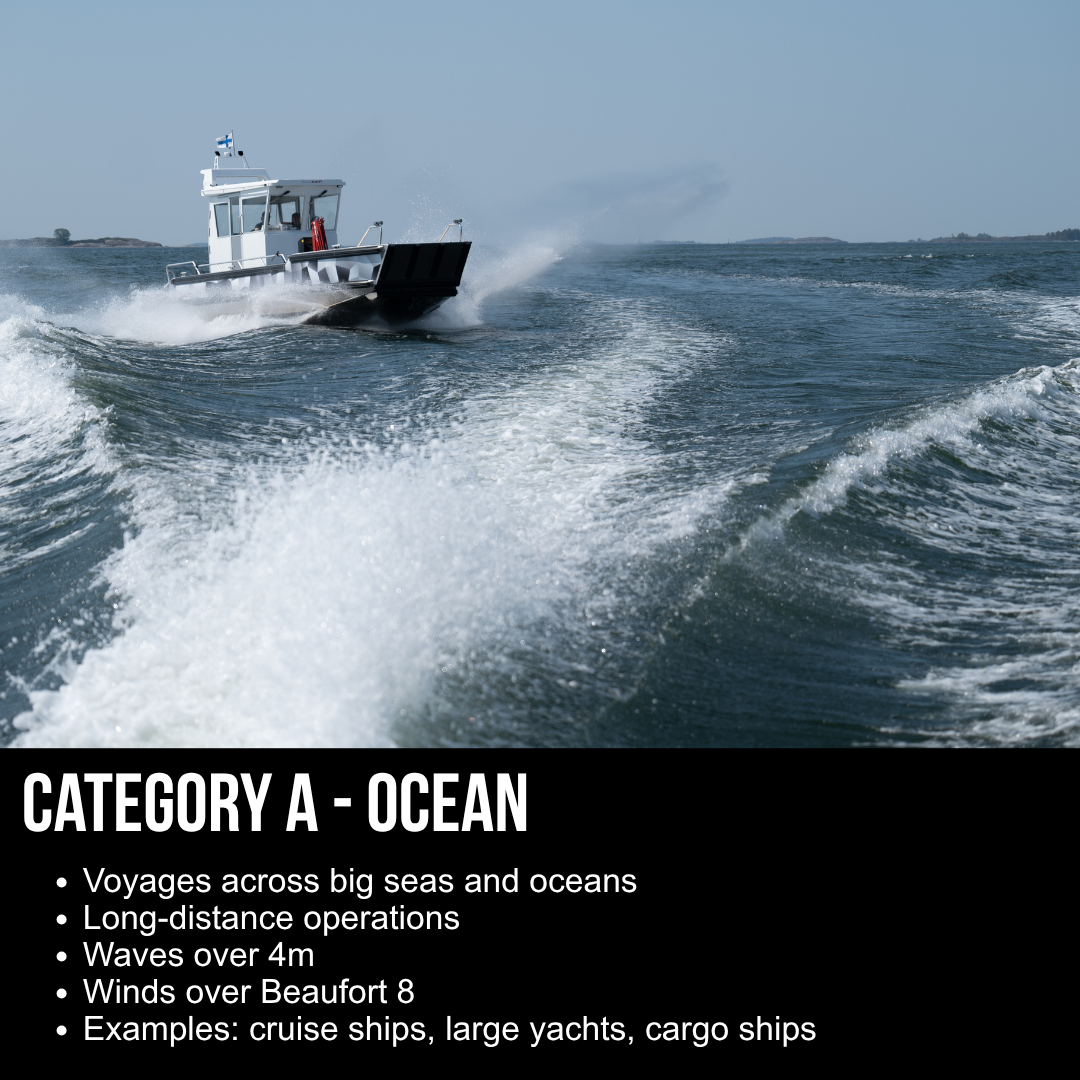
Category A (Ocean)Designed for offshore voyages and long-distance sea passages. In practice, nearly all ocean-going vessels fall into this category.
- Wind: above Beaufort Force 8 (> 40 kn)
- Wave height: above 4 m
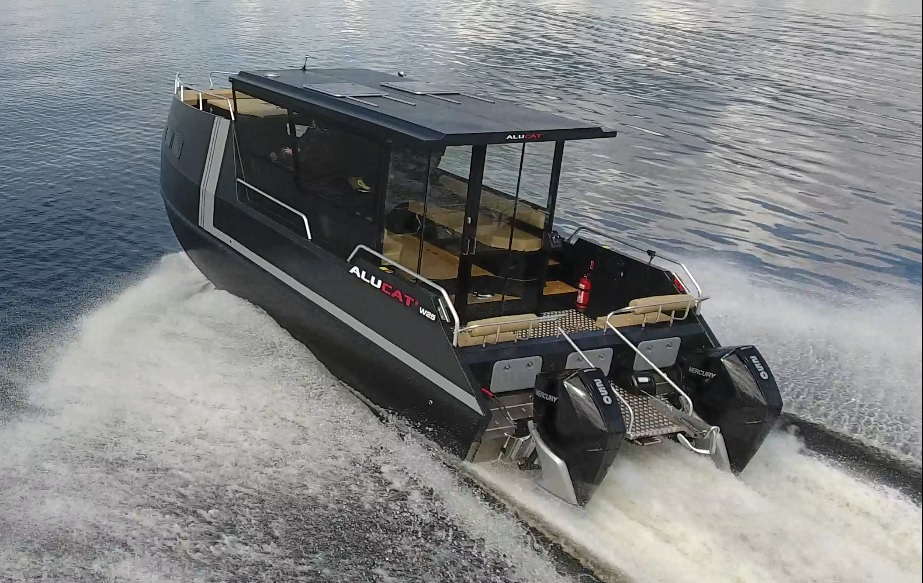
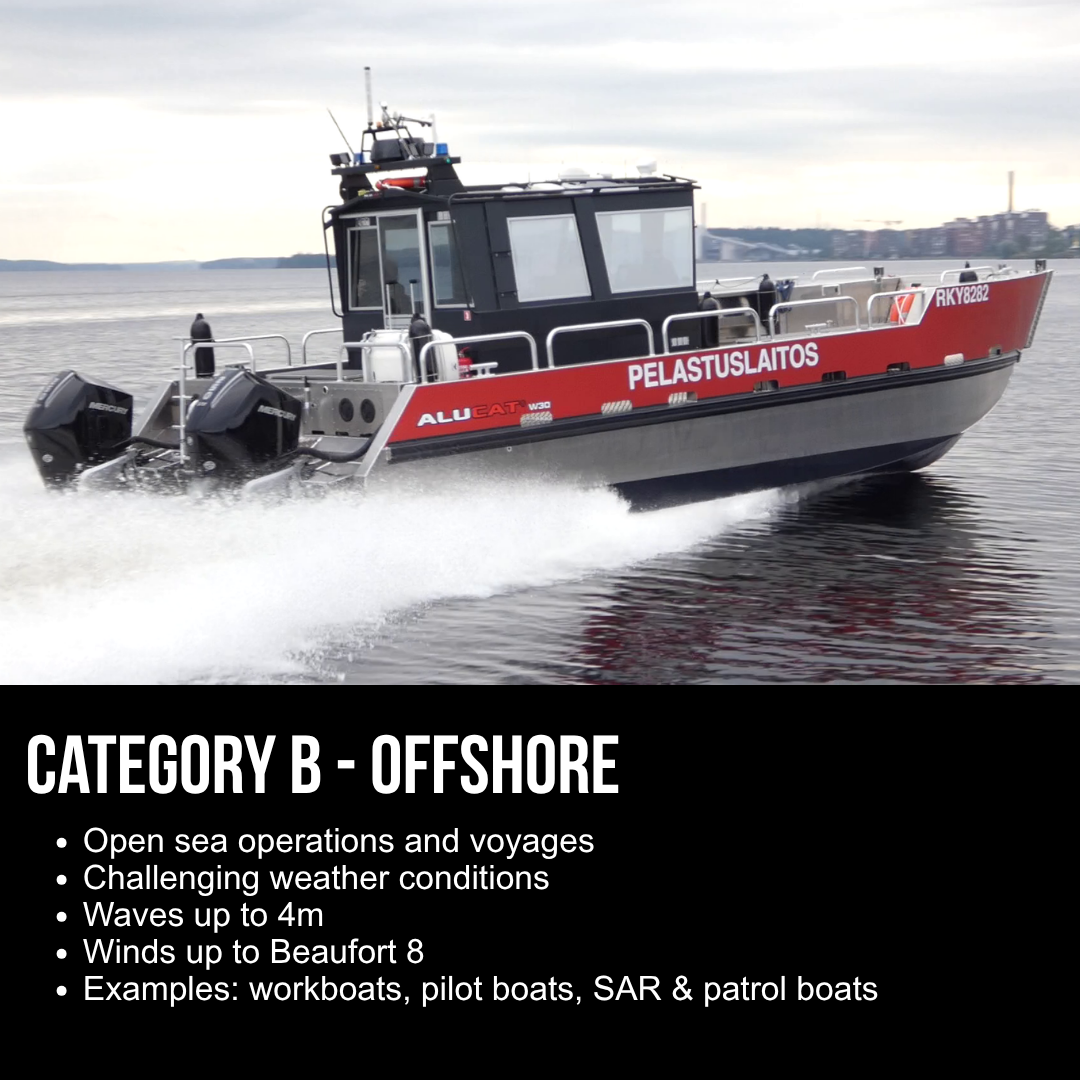
Category B (Offshore):Designed for offshore operations and missions far from the coastline. However, the hull is not as robust as those of ocean-going vessels intended for transoceanic voyages. For example, our latest model, the W30, is a Category B workboat specifically designed for offshore conditions.
- Wind: up to Beaufort 8 (~40 knots)
- Wave height: up to 4 m
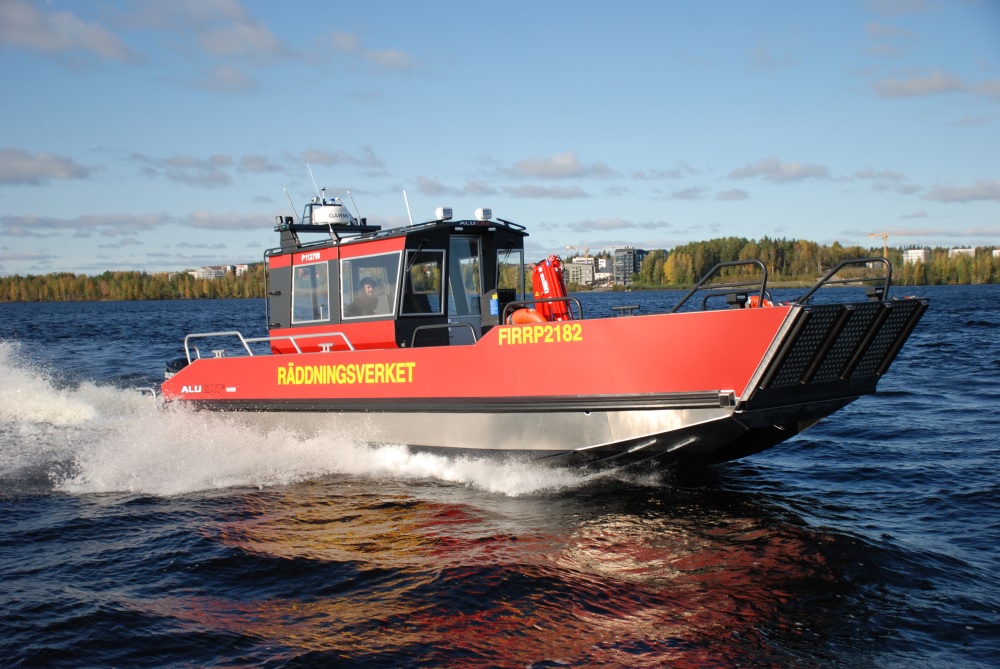
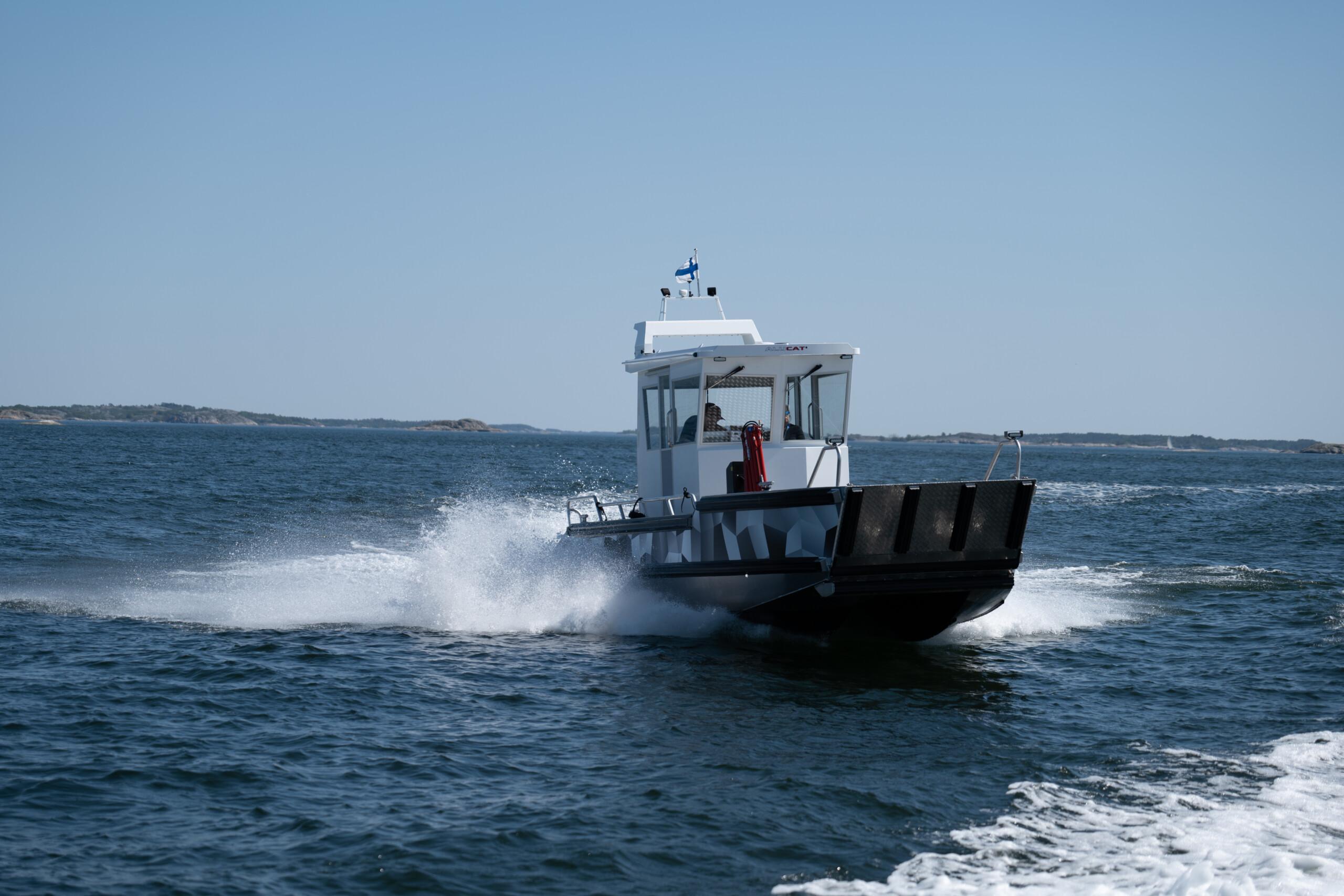
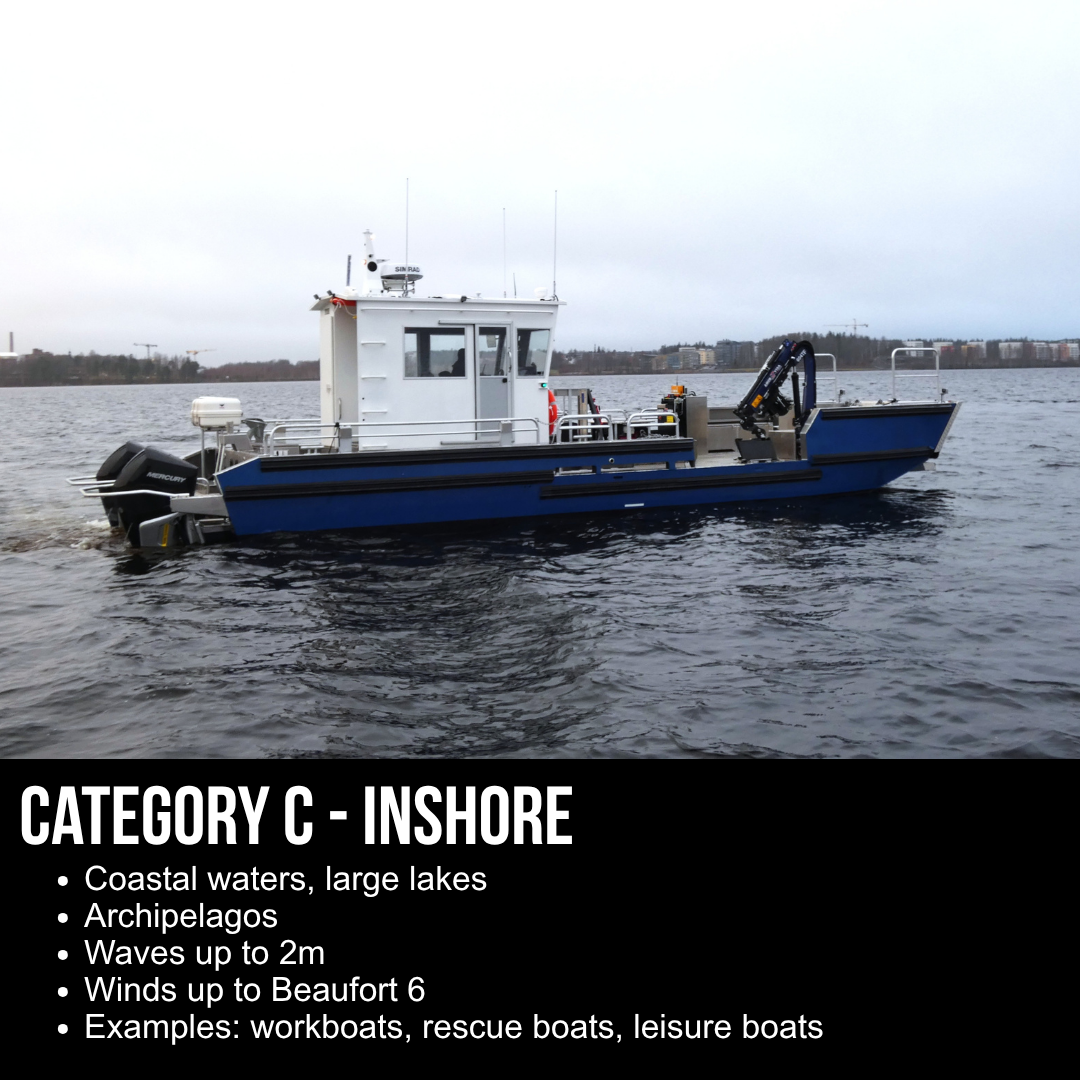
Category C (Inshore): Designed for coastal waters, archipelagos, and inland lakes. Most workboats fall into this category, and all ALUCAT models are also CE-certified in Category C.
- Wind: up to Beaufort 6 (~27 knots)
- Wave height: up to 2 m
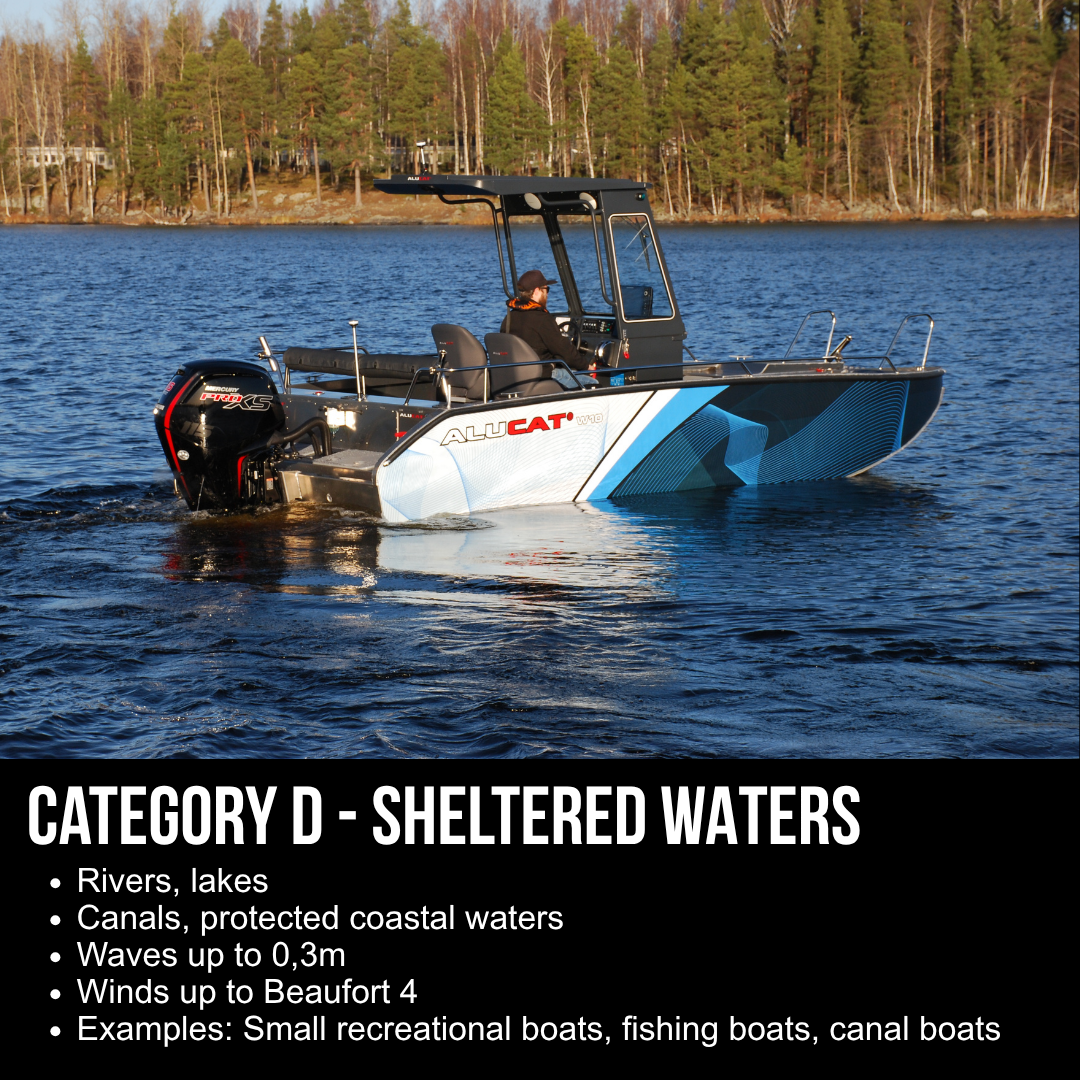
Category D (Sheltered Waters): Canals, rivers, lakes, and sheltered coastal waters. Most small recreational boats fall into this category.
- Tuuli: enintään Beaufort 4
- Wave height: up to 0.3 m
Why is the classification important?
The classification system is directly related to a boat’s safety and intended operating conditions. For example, it would be unsafe to attempt an ocean crossing in a Category D boat, whereas Category A vessels are specifically designed for such conditions. Every boat manufactured and placed on the market within the European Union must carry a CE classification. In addition, the CE category defines the environmental conditions a vessel is designed to withstand. For instance, a Category B workboat must be capable of safely operating in open-water conditions with wave heights exceeding four metres.
How is the CE classification reflected in ALUCAT® boats?
The ALUCAT® product range is designed for professional use in a wide variety of operating environments. Most of our current models are Category C certified, meaning they are designed for coastal waters, archipelagos, and inland waterways. However, our new W30 represents a new size class within the ALUCAT® range and is the first model to receive a Category B certification. This means the vessel is designed to operate safely even in demanding offshore conditions. At ALUCAT®, CE classification is considered from the earliest stages of the design process, alongside the vessel’s intended use, payload capacity, stability, and safety requirements.
What does the CE classification mean in practice?
CE classification is an important part of boat manufacturing and maritime safety. It indicates the conditions for which a vessel has been designed and tested. The more demanding the intended operating environment, the stricter the requirements the classification places on aspects such as hull construction, stability, and buoyancy.
Choosing the right CE category is an important safety consideration. A boat designed for coastal waters and inland waterways is the perfect choice for its intended environment, but it is not suitable for crossing large offshore areas. For this reason, it is always worth reviewing a vessel’s CE classification before purchase, especially when acquiring a boat for professional or government use. At ALUCAT®, we work closely with each customer to define the vessel’s intended mission profile and operating conditions, which in turn determine the appropriate CE classification.
The CE classification tells you much more than just a letter on a boat's builder's plate. Explore our range and discover which model is best suited to your operational needs.
Read more about the topic:
CE Design Categories for Boats: A, B, C, D Explained